

TEXTILES | LONDON
How does your craft help you explore memories, and is there a specific moment that inspired this piece?
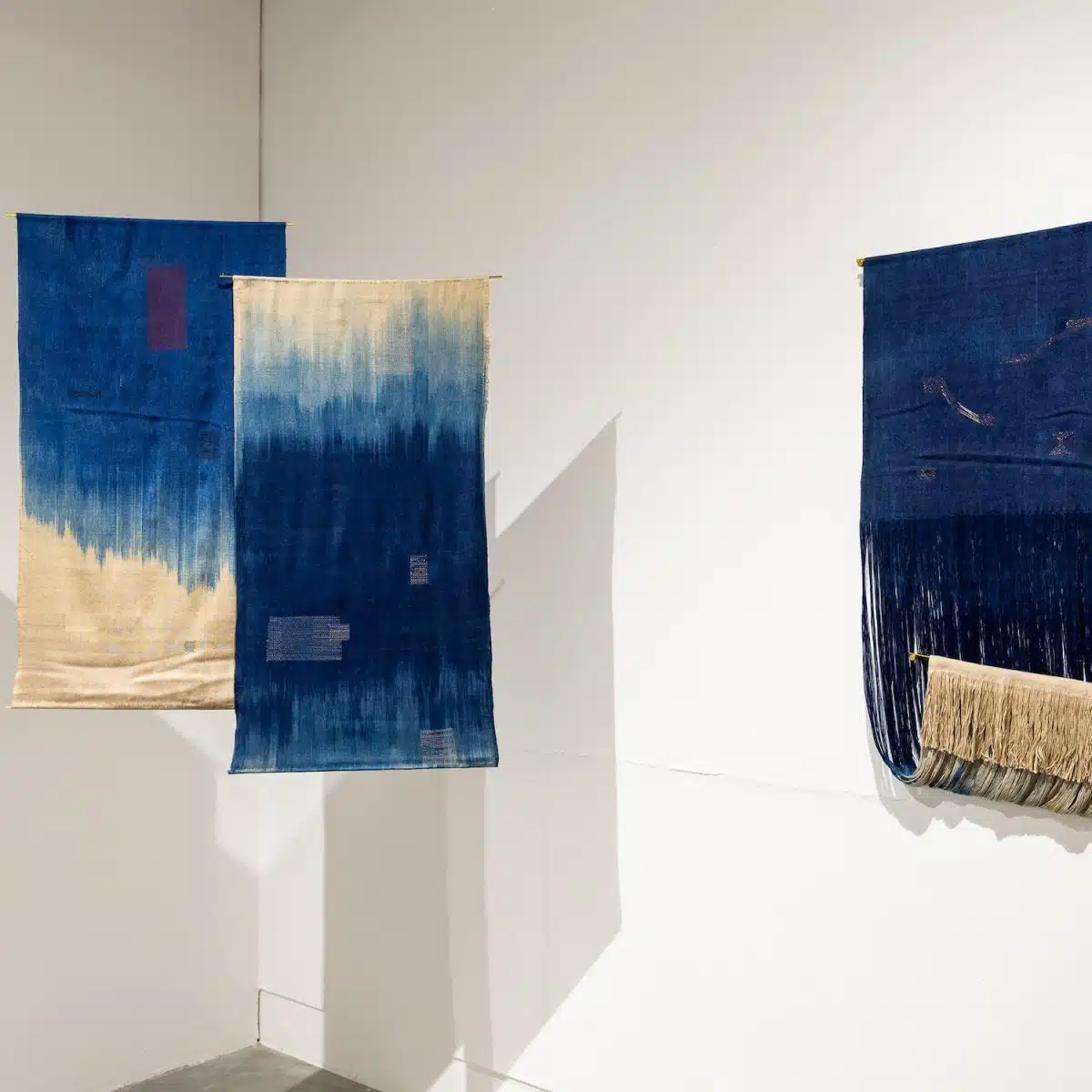
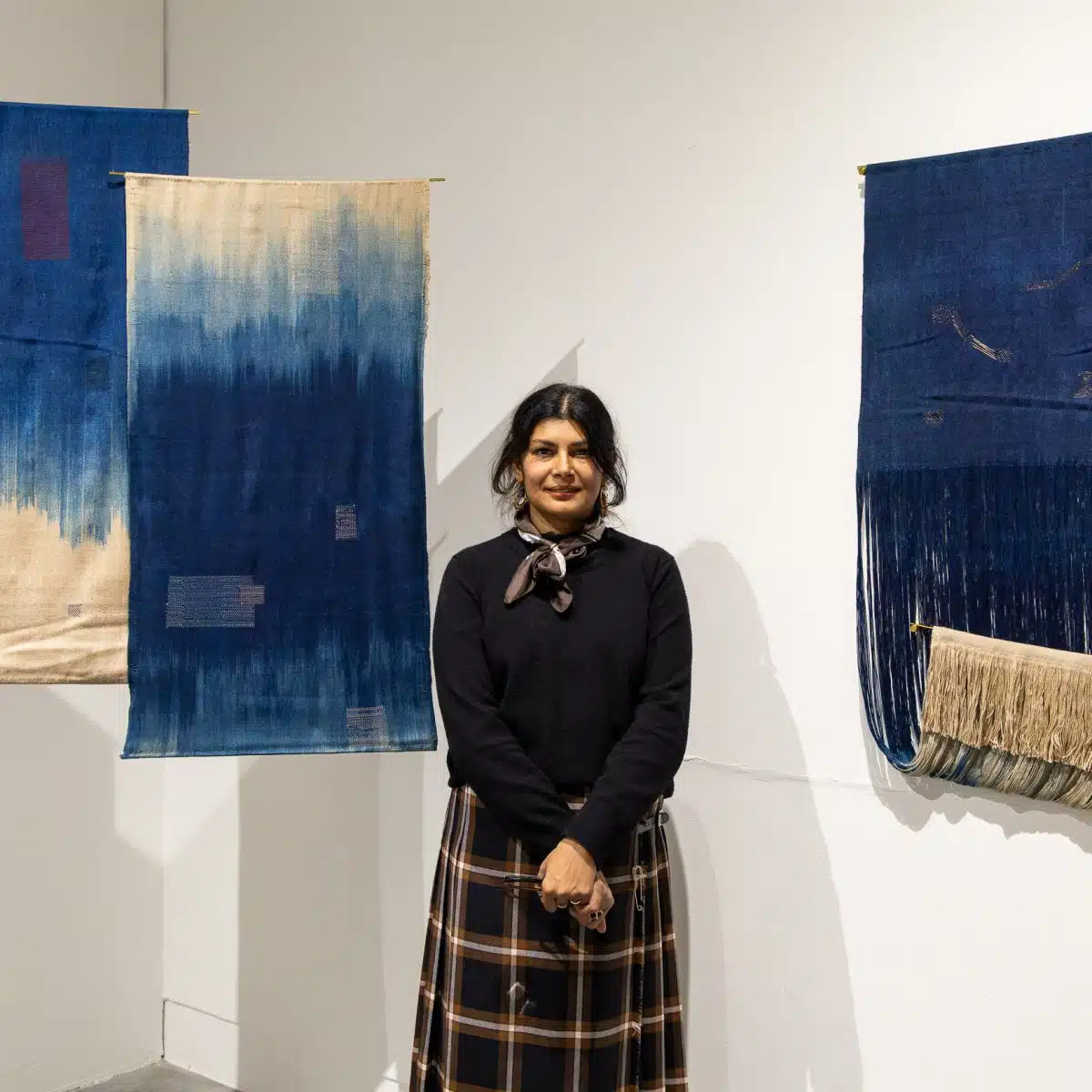
My craft allows me to trace personal and inherited memories through material and process. These pieces grew from my Indigo River Clothbound Sea collection, which I’ve been developing over the past year. The ‘river’ evokes Bangladesh, my family’s homeland and a place shaped by waterways once stained blue by the Indigo trade. While the ‘sea’ recalls the movement of woven cloth between Bengal and Britain.
A pivotal moment for me was learning how deeply the colonial textile and indigo industries affected Bengali weavers and farmers, leading to both cultural loss and famine. That realisation continues to surface whenever I work with indigo or traditional Bengali techniques, and it directly inspired the way this woven form unravels before the viewer. Its physical undoing becomes a metaphor for both historical harm and the ongoing struggles of today’s weaving communities in Bangladesh.
As a British Bengali, weaving helps me navigate two cultural lineages. By combining Bengali Indigo and a supplementary-weft technique with a Western sculptural approach, influenced by artists like Eva Hesse and Peter Collingwood, I reconnect with ancestral practices while questioning romanticised ideas of South Asian craft. The copper threads reference antique tapestries and the storytelling tradition embedded in cloth, allowing me to weave together memory, material, and the wider history of diaspora.
Indigo River Clothbound Sea: Undone, 2025, Silk • £1,900
Indigo River Clothbound Sea: Fragments, 2025, Silk and copper • £1,900
Indigo River Clothbound Sea: Nila, 2025, Silk • £1,900
Find out more about Majeda Clarke here.
Images of work: Jules Lister